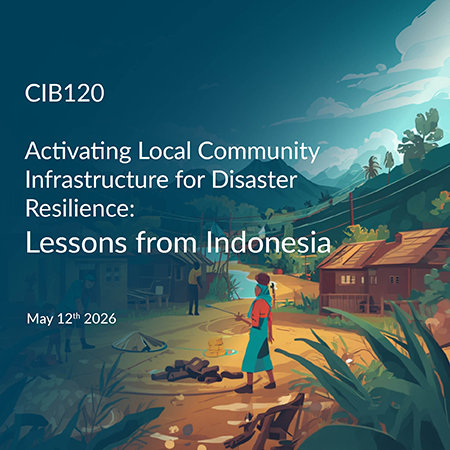
CIB W120 Disasters and the Built Environment will host its next seminar on Tuesday 12th May on Activating Local Community Infrastructure for Disaster Resilience: Lessons from Indonesia.
Date: Tuesday 12th May, 6.00-7.30 PM (AEST)
Community infrastructure, such as schools, university campuses, and places of worship, is widely recognised as an important local resource for disaster resilience. Yet what it takes for this infrastructure to function effectively remains insufficiently understood. This session draws on experiences from Indonesia to address these questions.
We are pleased to host three distinguished speakers, with the session chaired by Prof. Temitope Egbelakin the co-coordinator of CIB W120.
Dr. Rahmawati Husein brings operational experience from the Muhammadiyah Disaster Management Center (MDMC) to illustrate how such infrastructure is mobilised through an organised institutional network across all disaster phases.
Prof. Fauzan examines the physical readiness of community buildings, drawing on structural assessment and retrofitting experience following major earthquakes in West Sumatra, to ask whether this infrastructure is equipped to serve its intended role when disaster strikes.
Dr. Muhammad Riza Nurdin examines how social capital shapes the capacity of faith-based organisations such as MDMC to activate local resources effectively, and why similar approaches produce different outcomes across contexts. The session offers insights relevant to practice, policy, and research on community-based disaster resilience.
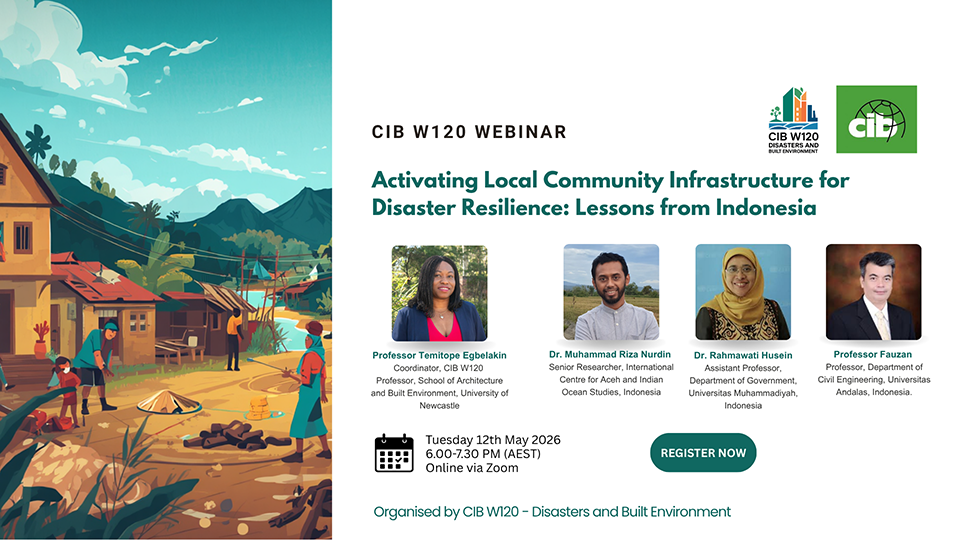
Panel members
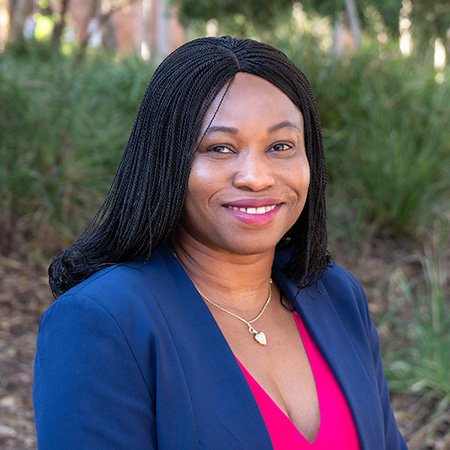
Prof. Temi Egbelakin is world-class researcher in disaster resilience, construction management and sustainable developments. Her research focuses on enabling the resilience of the built environment, communities, and organisations, by creating pathways to improve the resilience and sustainability of buildings, and communities at the national and international scales.
Temi have led the development and implementation of numerous innovative projects in her areas of expertise. She has published over 100 peer reviewed publications. The impacts and relevance of her research outcomes are evident through policy interventions, collaborative industry engagements, international collaborations and the uptake and application of her scholarly her works.
Dr. Husein is an assistant professor of Department of Government, Universitas Muhammadiyah Yogyakarta. She received her master program for the Urban and Regional Planning University of Cincinnati and her doctoral from Texas A&M University, US. She has been working in disaster/humanitarian related works for 20 years. She is an expert panel of Muhammadiyah Disaster Management Center (MDMC) and a chairperson of Aisyiyah Environment and Disaster Management Agency (women NGO). Since 2016, she has served as an Advisory Board member of the Indonesian National Disaster Management Agency (BNPB) and advisory board of Humanitarian Forum Indonesia (HFI/Interfaith).
Prof. Fauzan is a Professor in the Department of Civil Engineering at Universitas Andalas, Padang, West Sumatra, Indonesia. He holds a Master’s degree from the University of Sheffield and a doctoral degree from Toyohashi University of Technology. His research focuses on structural engineering, earthquake engineering, construction materials, and structural retrofitting. His work includes seismic and tsunami vulnerability assessments of a wide range of buildings, including schools, hospitals, and government offices, as well as the design of retrofitting solutions for structures that do not meet current Indonesian building codes. He is a member of the Disaster Research Center of Universitas Andalas and contributes to the BUiLD project, a European Commission funded initiative establishing university-based centres of excellence in disaster resilience across Indonesia.
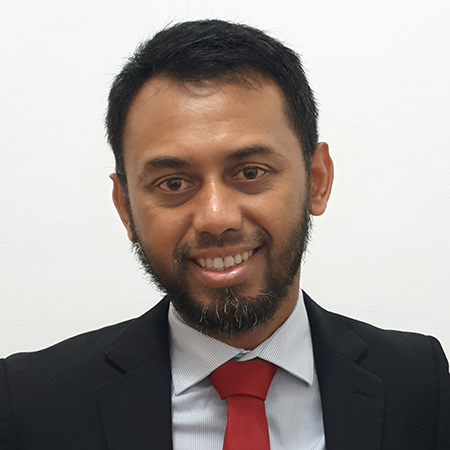
Muhammad Riza Nurdin is a Visiting Researcher at Asia-Japan Research Institute (AJI), Ritsumeikan University, Japan, and a Senior Researcher for the International Centre for Aceh and Indian Ocean Studies (ICAIOS), Banda Aceh, Indonesia. His research interests include development anthropology, non-traditional security, humanitarianism, religion and development, and social policy. Dr. Riza holds a Ph.D in Southeast Asian Social Inquiry from the University of New South Wales, Australia. Prior to that, he obtained an M.A in Southeast Asian Studies from the University of Passau, Germany, and a B.A in Islamic and Arabic Studies from Al-Azhar University, Egypt. Among his recent publications are “Mobility, Acquiring New Homes, and Transformation of Life: Asian Experiences” (co-edited, 2025, AJI Ritsumeikan University) and “Islamic faith-based organisations and their role in building social capital for post-disaster recovery in Indonesia” (Disasters, 2024). His personal website is https://muhammadrizanurdin.com.