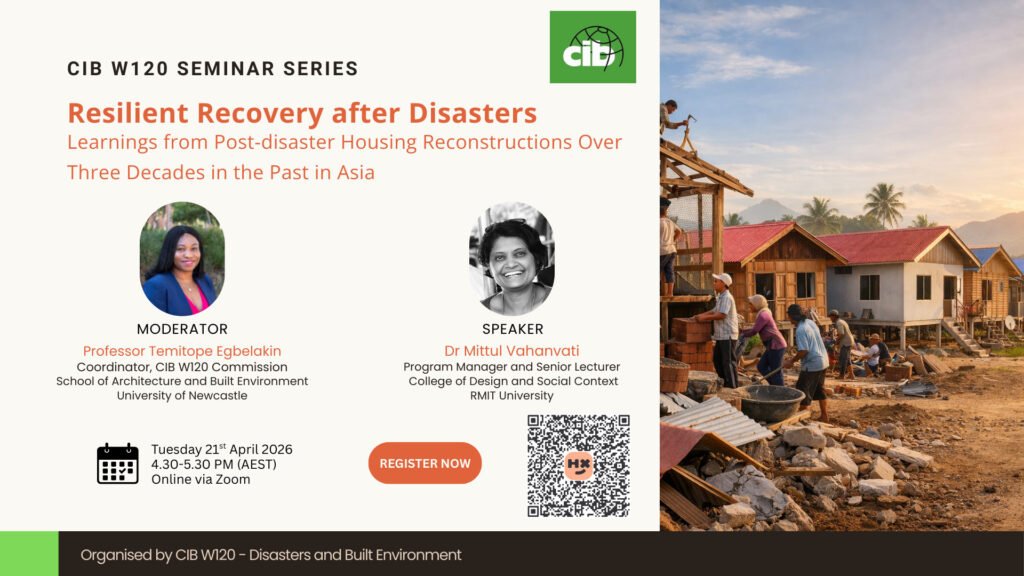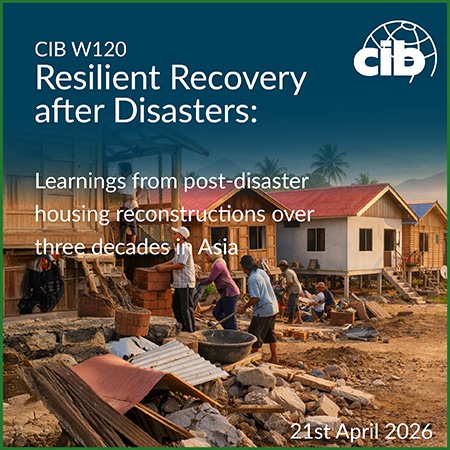
CIB W120 seminar – Resilient Recovery after Disasters: Learnings from post-disaster housing reconstructions over three decades in the past in Asia
Tuesday 21st April 2026 at 4.30-5.30 PM (AEST)
The real test of resilience begins 10 or more years after a disaster. By then, quick fixes reveal their flaws, but well-designed recovery strategies – policies, programmes, partnerships, and practices – pay societal dividend in terms of a safer and a more resilient housing system that mitigates the compounding impacts of hazards.
Seminar overview
However, there is an urgent need to treat homes as an infrastructure and synthesise learnings from past recovery interventions, amid increasing risk from natural – and climate-fuelled hazards that are becoming more frequent, intense and complex. Learnings from long-term after a post-disaster housing reconstruction has potential to inform innovative ways of planning, housing design, construction, maintenance, and governance, in this “new abnormal” times.
This seminar presents empirical findings from cross-country and long-term analysis of post-disaster housing reconstruction from India, Thailand, and Japan. Findings reveal how proactive governance, collaborative coordination (including civil society organisations), and recovery programs design (including assistance package), during disaster recovery as well as on-going regulatory revision, enforcement, and capacity building long after the disaster, can shape resilient recovery outcomes.
Speaker
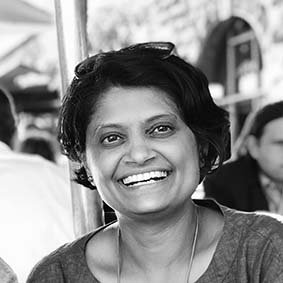
Dr Mittul Vahanvati, a Program Manager and Senior Lecturer in RMIT’s DSC college, is recognised for improving housing resilience to disasters through responsive governance and capacity building of all involved stakeholders, through post-disaster recovery interventions. Trained as an architect and practiced in industry for over 8 years, she has led several applied research projects with industry, policy makers and practitioners, to inform building policies, construction codes, technical asset’s resilience, and community resilience, in the context of India, Solomon Islands and Australia.